

Langue
Langue
Shaving a single gram off a PET preform sounds trivial. Multiply that gram across 500 million bottles a year, and you've just recovered enough resin to fill a warehouse. That's the fundamental arithmetic behind lightweighting — and why it has become one of the most discussed strategies in beverage packaging today.
Resin accounts for roughly 70% of total preform production cost. No other lever — not energy, not labor, not equipment depreciation — comes close. This means any credible cost-reduction strategy has to start with material weight.
Lightweighting refers to the deliberate reduction of PET resin used per preform, achieved through design optimization, mold engineering, or neck finish changes — without degrading the mechanical or barrier performance of the finished bottle.
It is not simply making a bottle thinner. Done carelessly, wall thinning leads to haze, stress cracking, top-load failure, or carbonation loss. Done correctly, it leverages the physics of stretch blow molding: when PET is heated and biaxially stretched, polymer chains align into a dense, resilient grid. A well-stretched thin wall can be stronger than a thicker, un-oriented one. The design challenge is engineering the preform so that material ends up exactly where it's needed during the blow cycle.
Industry data underscores the scale of the opportunity. According to market research, preform weight directly drives bottle production cost, and a 5% reduction in part weight can return a 4.4% saving on the total cost of the product — far exceeding the return from equivalent cuts in equipment spend. The lightweighting trend is projected to deliver a material reduction of nearly 15% in standard water bottle preforms over the next five years.
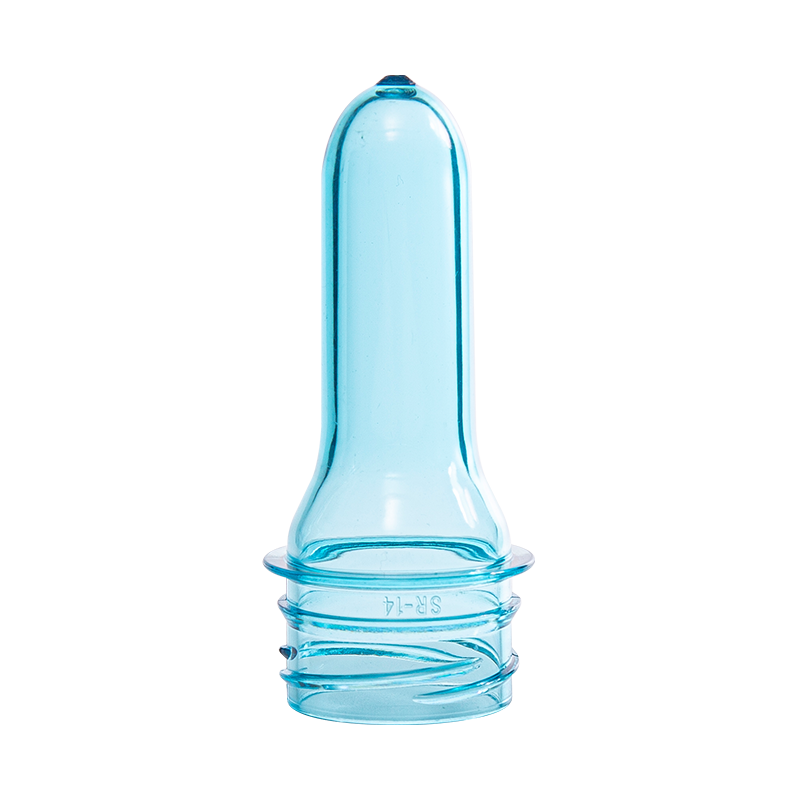
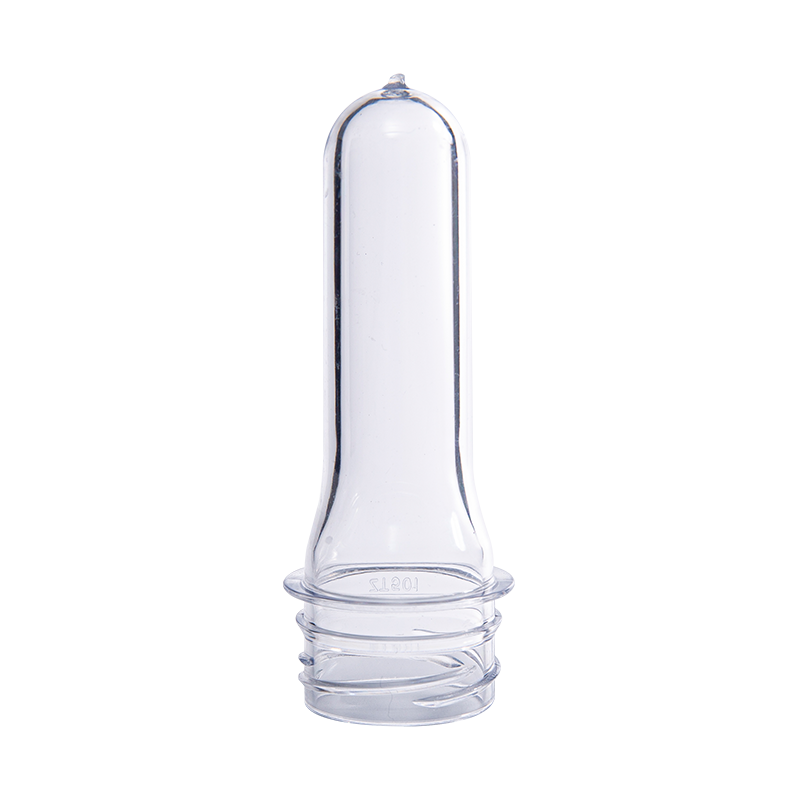
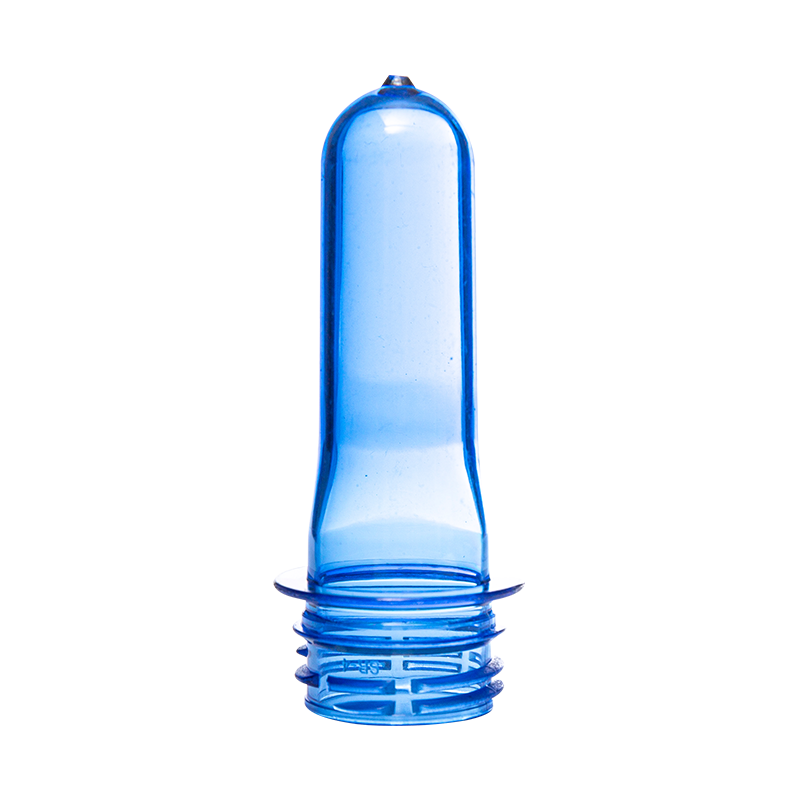
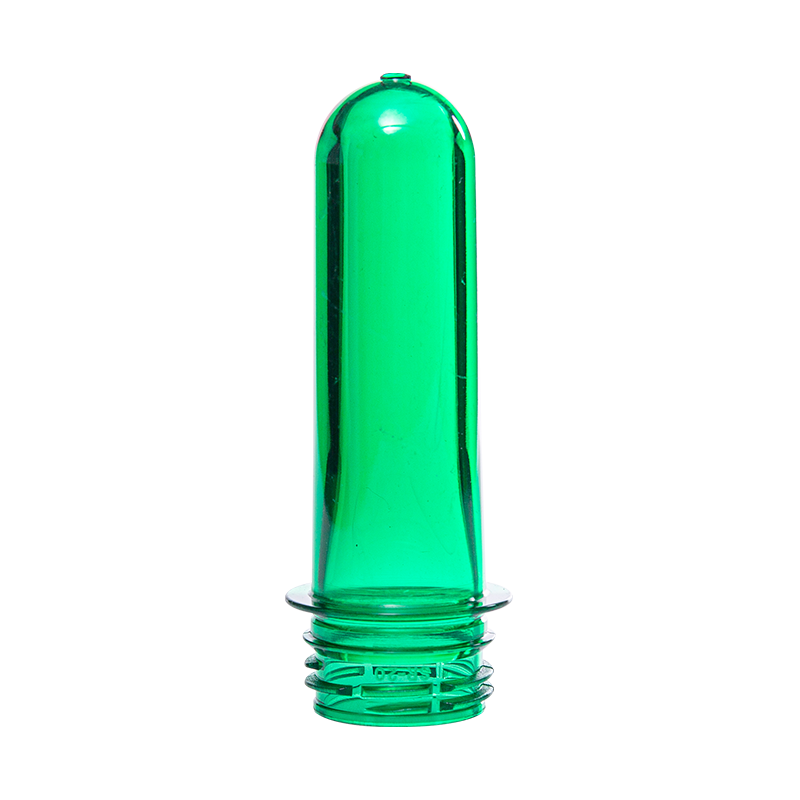
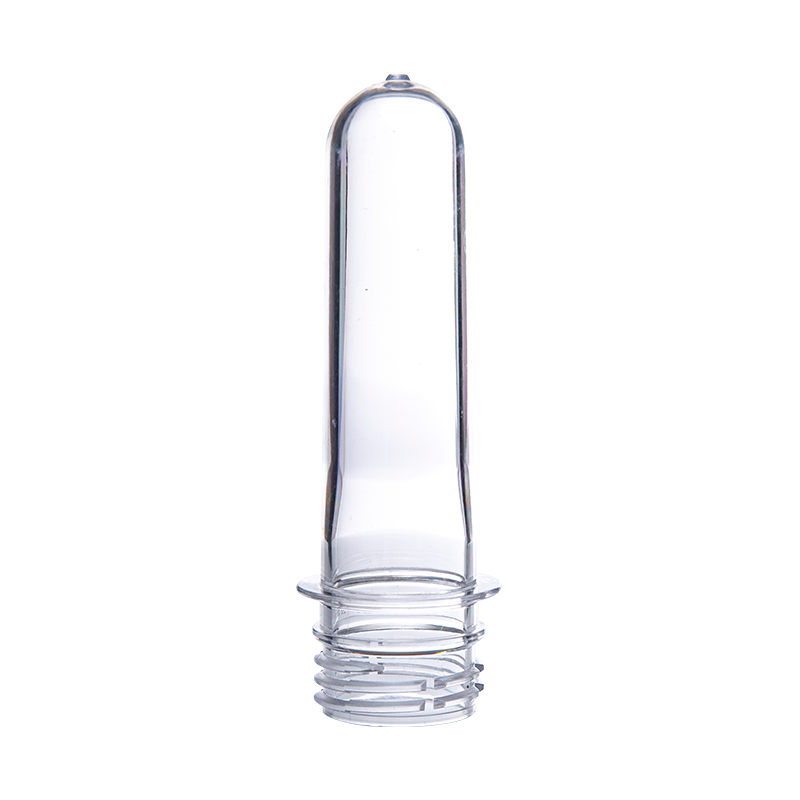
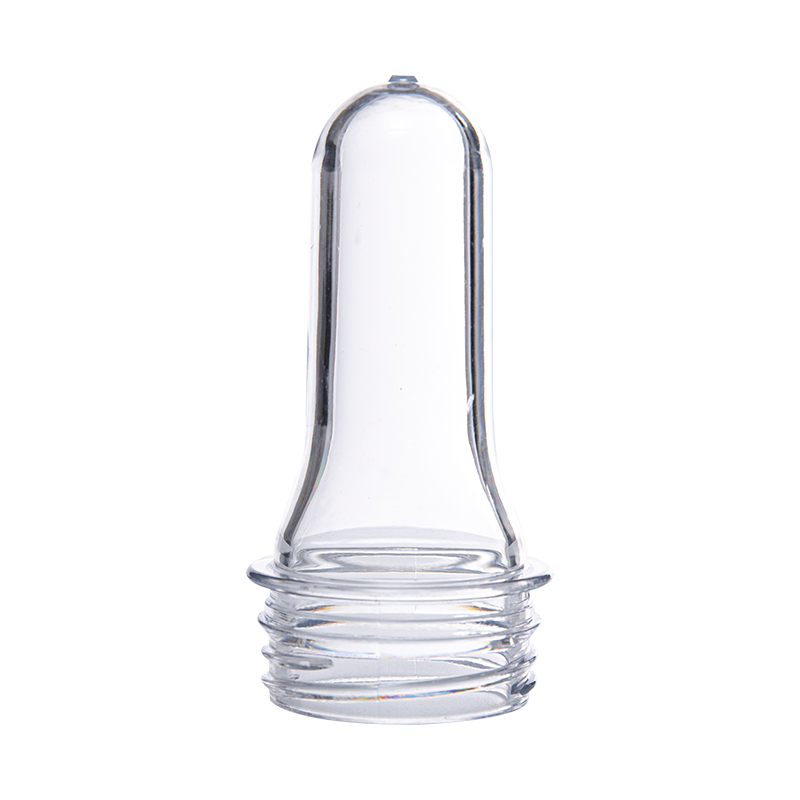
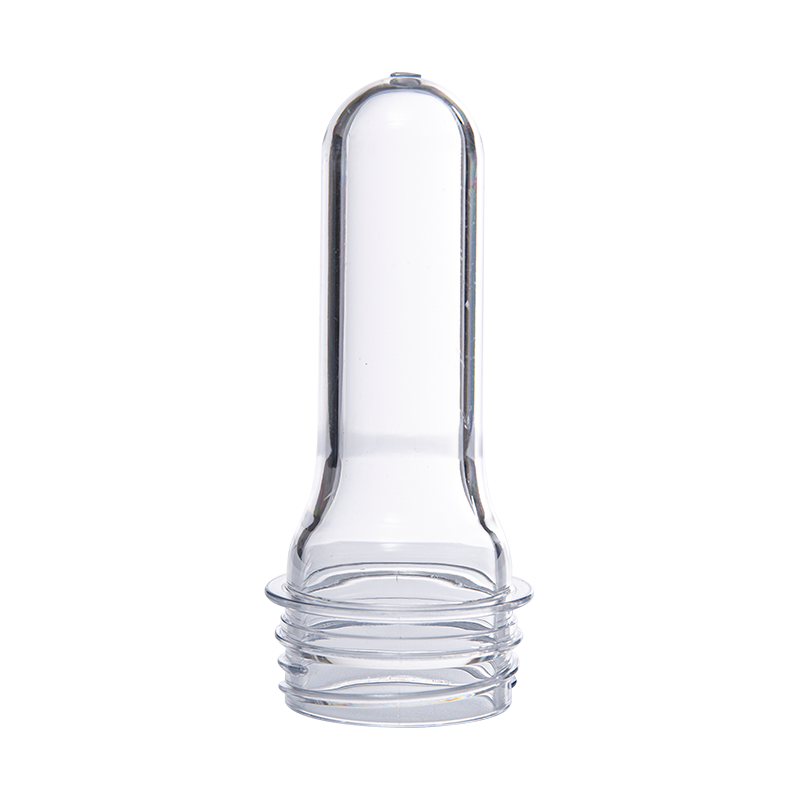
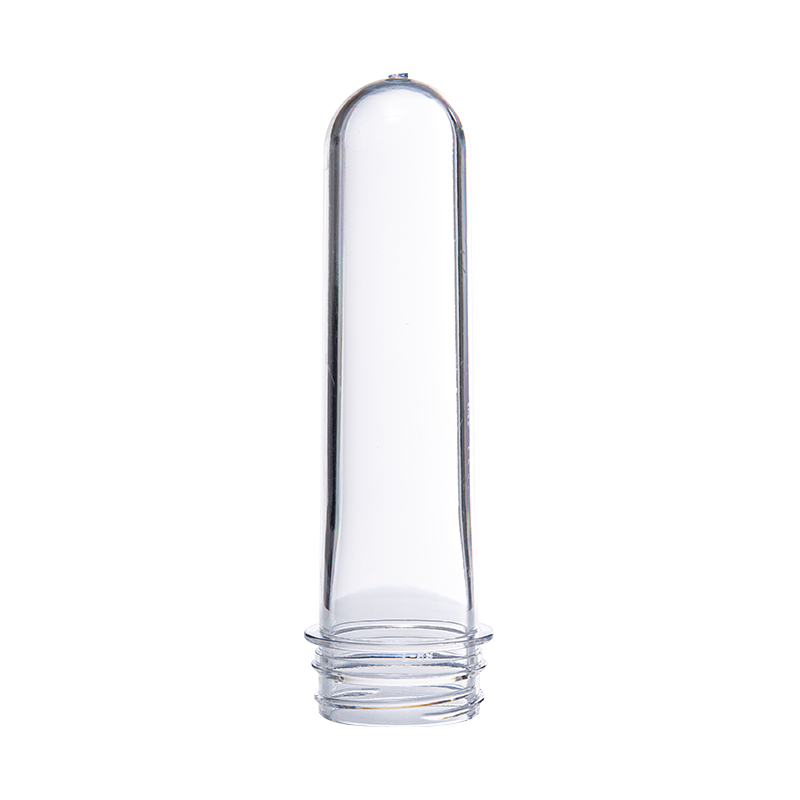
The neck finish is the heaviest, most structurally complex part of a preform — and the easiest to overlook because it is "fixed" by cap compatibility. In practice, switching from a standard PCO 1881 finish to a lightweight variant of the same standard can save between 1.5 g and 1.9 g of resin per unit without requiring a new cap tooling investment. For high-volume lines, that single change translates directly into significant annual savings. Our 28mm PCO 1881 and PCO 1810 preform range is engineered with neck geometry precision to deliver these material efficiencies while maintaining cap torque and tamper-evidence performance.
Uniform wall thickness sounds ideal, but the body of a preform actually needs more material at the gate area and less in the mid-section that will stretch furthest during blow molding. Achieving optimal wall distribution requires accurate mold design and consistent injection parameters. Poorly distributed walls produce bottles with thin stress zones — visible as haze, or invisible until a pallet collapses under top-load. Correctly distributed walls allow lower overall weight with better mechanical outcomes. Optimizing preform design for cost reduction therefore always begins with a detailed wall profile analysis, not simply a target weight number.
The preform base accumulates material that needs to stretch radially during blow molding. Thin-walled base designs — developed specifically for high-stretch applications — can reduce base weight by a meaningful margin without generating stress whitening or gate blush in the finished bottle. This is one of the more technically demanding lightweighting approaches, requiring close alignment between preform supplier and blow-molder on reheat profiles and stretch-rod speed.
Higher intrinsic viscosity (IV) resins stretch more uniformly and allow thinner walls with equivalent barrier performance. Selecting the right resin grade is therefore not just a materials question — it is a lightweighting tool. Resin grade choices affect clarity, strength, and recyclability in ways that interact directly with how aggressively a preform can be lightweighted.
The financial case for lightweighting is most convincing when modeled at production volume. Consider a bottler running 300 million units per year on a mineral water line using a 30mm preform currently weighing 14 g. A well-executed lightweighting project that achieves a 1.5 g reduction — roughly 10.7% — produces the following approximate impact:
| Factor | Before | After (−1.5 g) |
|---|---|---|
| Preform weight | 14 g | 12.5 g |
| Resin per year | 4,200 metric tons | 3,750 metric tons |
| Resin saved (at $1,200/ton) | — | ~$540,000/year |
| Shipping weight reduction | — | 450 metric tons/year |
| Carbon footprint reduction | — | Proportional to resin saved |
Transportation costs drop alongside material costs, since lighter preforms ship more units per truck. Packaging taxes and Extended Producer Responsibility (EPR) fees — calculated by physical weight in a growing number of jurisdictions — also decrease proportionally. The financial benefits compound across the supply chain, not just at the injection molding stage.
Lightweighting fails when it is treated as a cost exercise rather than an engineering exercise. The most common failure modes are not dramatic — they are slow: slightly elevated reject rates at the blowing line, marginal carbonation loss after 6 weeks on shelf, or top-load failures that only appear when bottles are palletized in summer heat. Understanding common PET preform defects and their causes is essential before committing to any weight reduction program.
Managing quality risk in lightweighting requires three things: a controlled design-and-prototype phase before mass production; validated blow-molding trials at the target line speed; and ongoing process monitoring — particularly IV consistency and wall thickness distribution — once production begins. Suppliers who treat these steps as optional overhead inevitably deliver bottles that fail in the field.
At Honsen, our preform tooling uses multi-point gate designs and optimized cooling channels that maintain consistent wall profiles even on lightweighted specifications. Every batch is tested against dimensional tolerance and visual quality standards before shipment. You can explore our full range of food-grade PET preforms for water and beverage applications to see the specifications available across our standard weight ranges.
Reducing resin content and reducing environmental impact are the same action. Since 2022, the average weight of a standard 500ml PET bottle has decreased by approximately 20% industry-wide, driven by a combination of cost pressure and regulatory incentives. The trend is accelerating: the lightweighting movement is projected to deliver close to a 15% further reduction in standard water bottle preforms over the next five years.
For brands operating under EPR frameworks, or working toward Scope 3 carbon targets, this matters beyond the resin bill. A lighter preform means fewer kilograms of plastic entering the waste stream per unit sold — a metric that increasingly feeds directly into procurement decisions, retailer requirements, and brand sustainability reporting.
The most effective entry point is usually the neck finish. It carries the most weight, involves the most metal, and — for standard neck sizes like 28mm PCO 1881 or 30mm — has a well-developed library of lightweight variants that avoid cap retooling. From there, body and base optimization follow naturally as the blow-mold trials provide performance data.
Working with a supplier who has mold design capability, not just production capacity, shortens the development cycle considerably. Prototype iterations are fast when the supplier controls both the tool geometry and the injection process. Questions about tolerances, wall distribution, and resin IV can be resolved in days rather than weeks.
The outcome, done right, is straightforward: lower material cost per unit, lower shipping cost per unit, lower regulatory exposure — and a bottle that performs as well or better than the one it replaced.

Copyright © Foshan Honsen Plastic Industry Co., Ltd. All Rights Reserved.